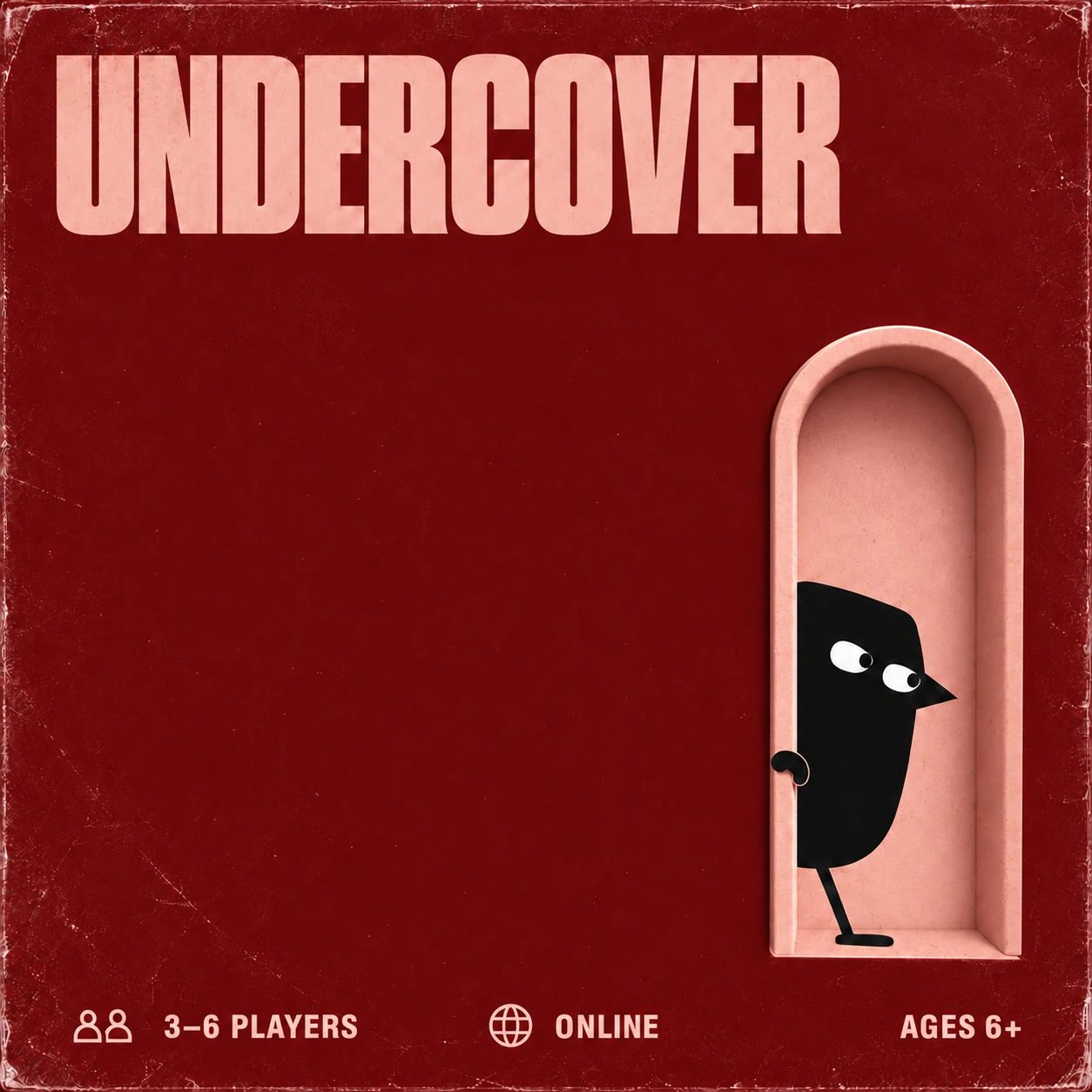
Undercover
3–12 PLAYERS · Private screens
Undercover is a good starting point for a group new to bluffing games. Players describe a secret word without saying it. One player has a different word, so each clue might reveal a mismatch. Listen for patterns before voting.
Rules, examples & play ↗Spyfall
3–12 PLAYERS · Private screens
Spyfall turns the conversation into questions. Most players know a location; the spy does not. Ask something that makes sense to an informed player without simply announcing where you are. The spy listens for enough clues to guess.
Rules, examples & play ↗Mafia / Werewolf
5–12 PLAYERS · Private screens
Mafia / Werewolf suits a group ready for distinct night and day phases. Hidden roles act at night, then the village discusses and votes by day. Table Bandit recommends five to twelve players. Eliminated players should stay quiet so they do not influence the remaining group.
Rules, examples & play ↗The Chameleon
3–12 PLAYERS · Private screens
The Chameleon asks players to blend in around a shared topic. Everyone gives a clue, but one person does not know the secret word. Clues that are too obvious help the outsider; clues that are too vague make you look suspicious.
Rules, examples & play ↗Keep private information private
Using separate phones or laptops is the easiest way to protect role cards. Share the room link, not a screenshot of a secret card. If you share one laptop, let only the intended player look when a private card is open. For remote sessions, arrange a separate voice or video call: Table Bandit does not include voice chat.
Good to know
Which should our group try first?
Try Undercover for a short explanation and clue-based discussion, or Spyfall if your group prefers questions. Choose Mafia when you want more roles and a longer sequence of phases. Read the house rules on each game page, as versions differ between groups.
These guides describe Table Bandit’s browser games and house rules. Check the game’s rulebook when playing a different version.
Find your game ↗