
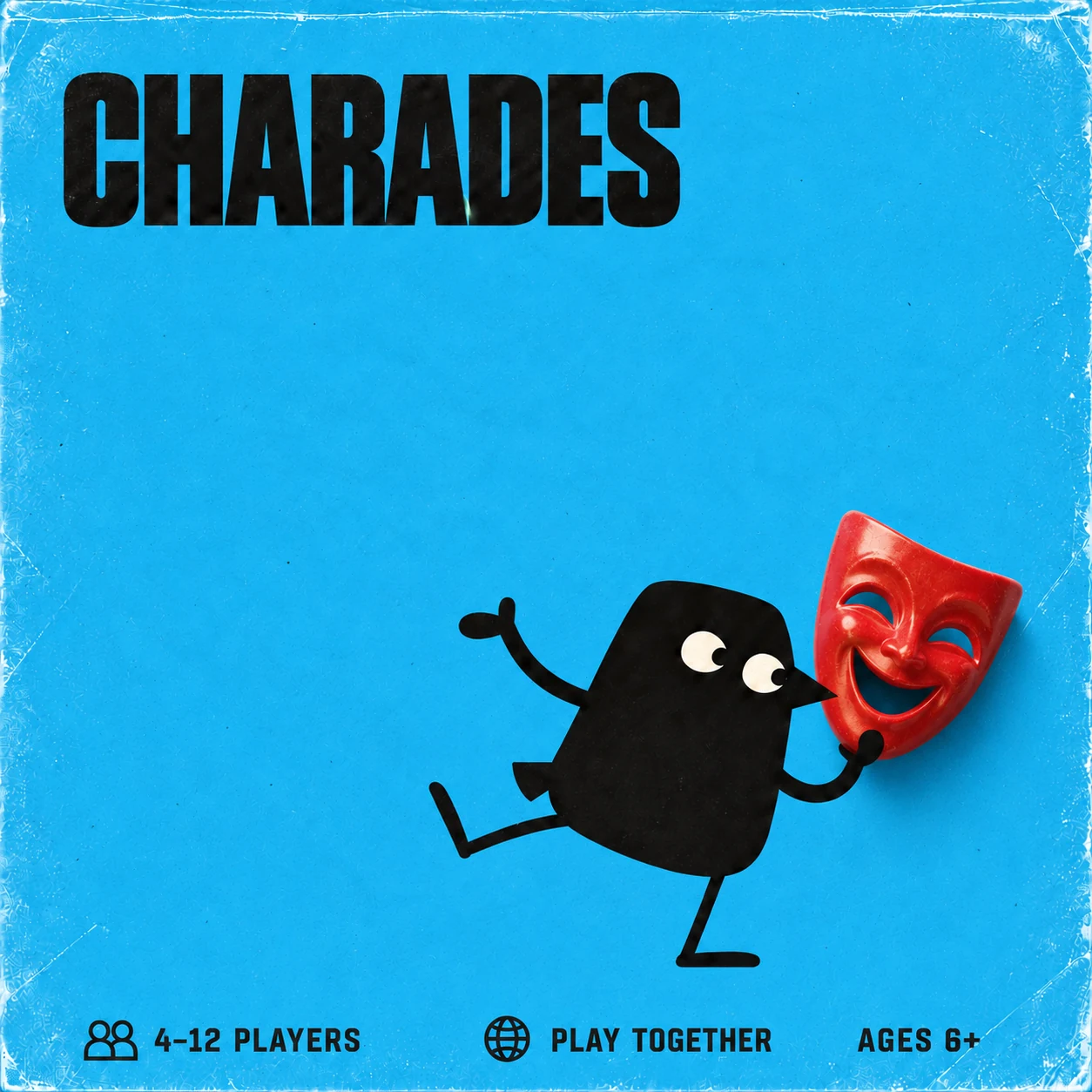
Charades
4–12 players · Video or in person
For a noisy start, choose Charades. Alternating players form two teams and the actor performs while teammates guess. With an odd number, one team will have an extra player; agree that this is fine before starting. Keep the acting space visible and let the host mark correct guesses so the actor can focus on performing.
Rules, examples & play ↗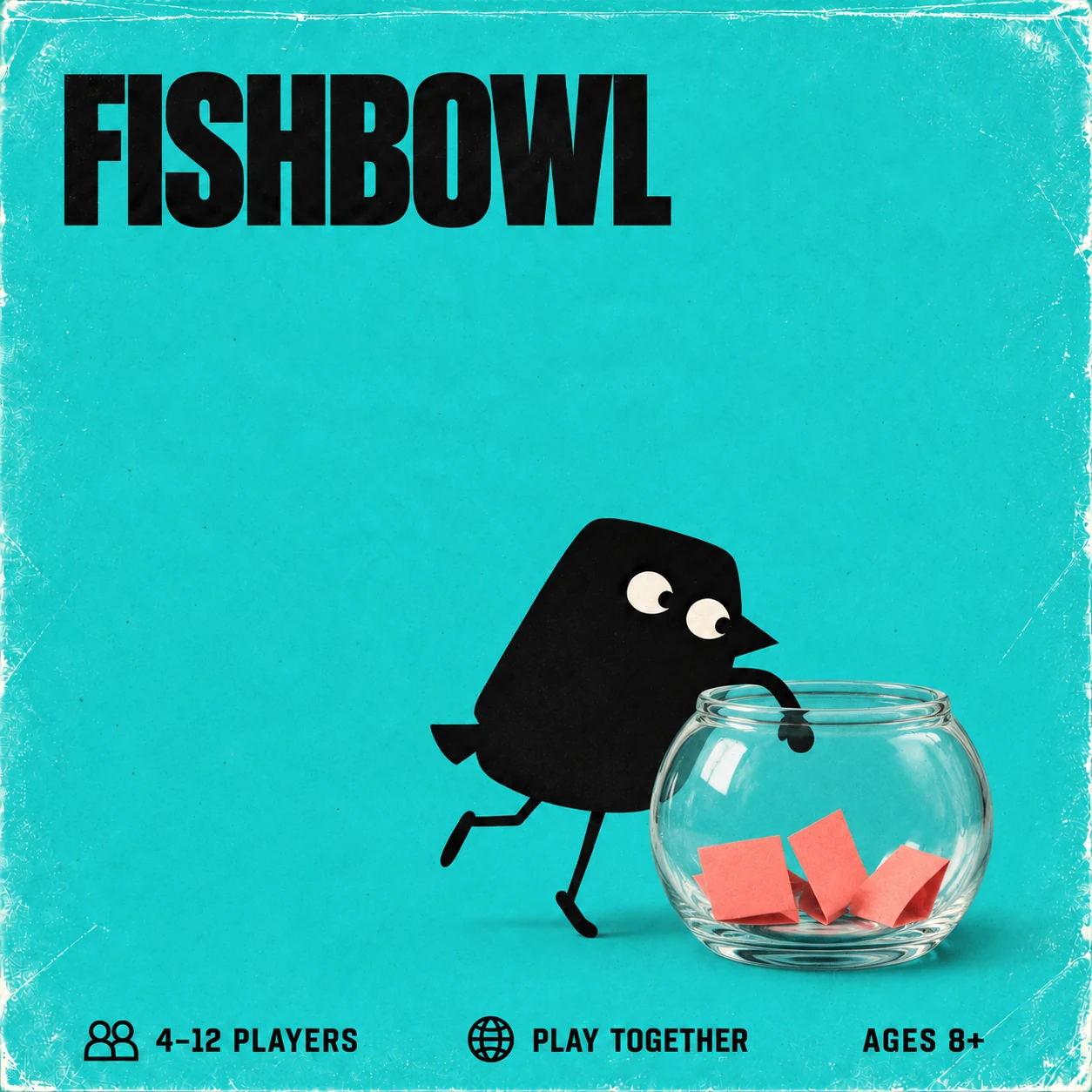
Fishbowl
4–12 players · Video or in person
Choose Fishbowl when your group wants a game to build across several rounds. The same prompts return as descriptions, one-word clues and silent acting. Earlier guesses become shared memories, so stay with the same bowl instead of starting fresh between clue styles.
Rules, examples & play ↗
Undercover
3–12 players · Private screens
Choose Undercover when everyone wants to talk. Each player offers a clue for a private word, but one person has a different word. Let everyone finish before the discussion. In a larger group, a quick turn order prevents the loudest voices from taking over.
Rules, examples & play ↗
Mafia / Werewolf
5–12 players · Private screens
Choose Mafia / Werewolf when the group is ready for night actions, public discussion and elimination. This version supports five to twelve players. Explain the roles before starting and ask eliminated players to stay silent about the game until it finishes.
Rules, examples & play ↗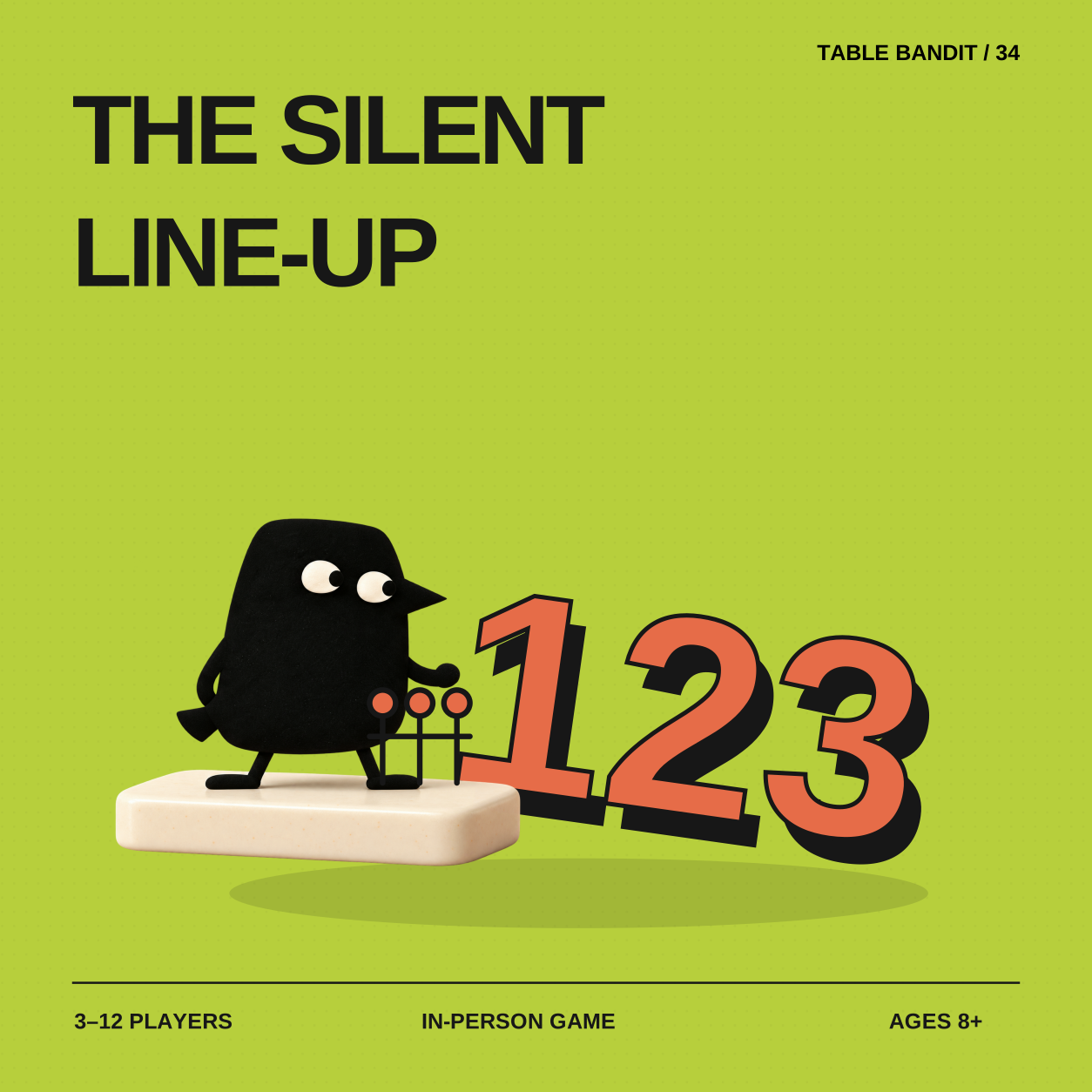
The Silent Line-Up
3–12 players · In person only
Choose The Silent Line-Up when everyone is physically together and wants a break from screens. Read the ordering challenge, put devices down and arrange yourselves using gestures. It needs enough clear space for the group to move; it is not a remote video-call game.
Rules, examples & play ↗A simple plan for the evening
Start with one demonstration turn of Charades. If the group wants more movement, continue into Fishbowl; if people are enjoying the conversation, switch to Undercover. Avoid explaining every game at once. Choose the next one after you see what the group enjoys.
Keep turns moving
Ask everyone to join the same room before the host starts. Use first names or distinct nicknames so votes and turns are easy to follow. Timers wait for a tap, giving the next player a moment to get ready. Scoring is optional, but use the game’s normal turn controls when you want to preserve a full match.
Good to know
What if we have more than twelve people?
Most Table Bandit rooms support up to twelve players; Kaladont supports up to six. For a larger gathering, split into separate rooms and rotate groups between games. Do not put several people under one player name in a hidden-role game, because their private roles and votes would be shared.
These guides describe Table Bandit’s browser games and house rules. Check the game’s rulebook when playing a different version.
Find your game ↗