A quick answer
Start with Same Brain for private thinking time, 20 Questions for a shared puzzle, or an untimed One-Word Story. Offer a pass and avoid requiring solo acting or personal disclosures.
Choose your starting point
| Game | Players | What you do |
|---|---|---|
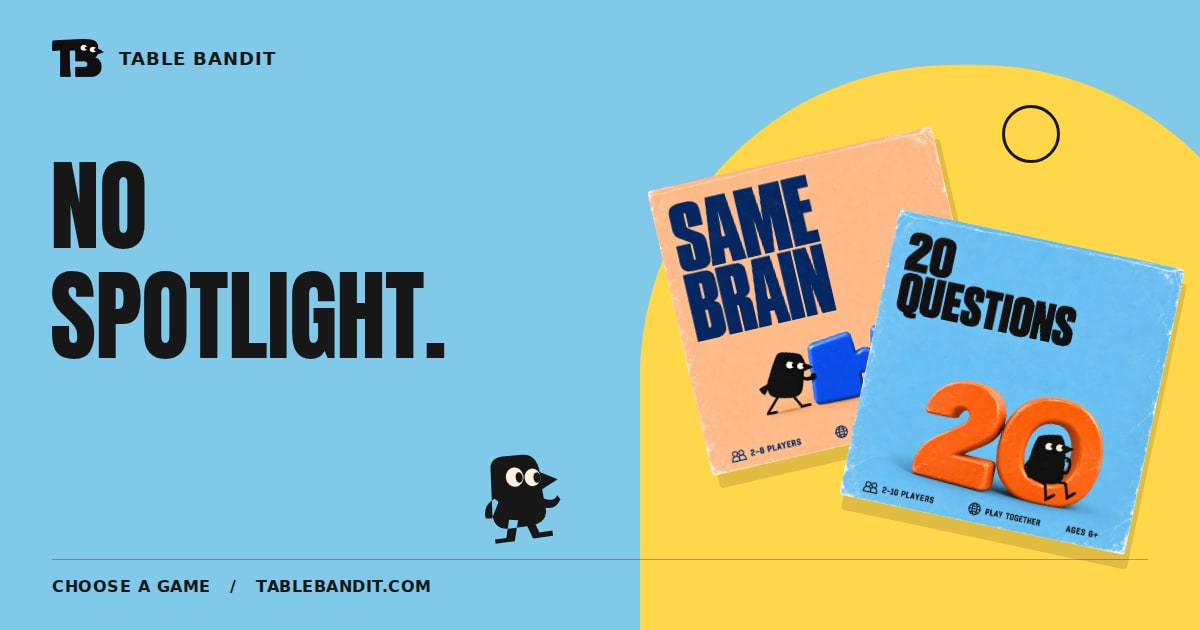
| Same Brain | 2–12 | Answer the same prompt without discussing it. Try to match someone. |
| 20 Questions | 2–12 | One player knows the secret thing. Everyone else has twenty yes-or-no questions. |
| One-Word Story | 2–12 | Build one ridiculous story together, saying exactly one word per turn. |
What it looks like
Before the first turn, say: “We’re matching answers to one simple prompt. You can watch this round or pass. We’ll reveal together, then decide whether to play another.” Keep that promise when somebody chooses to sit out.
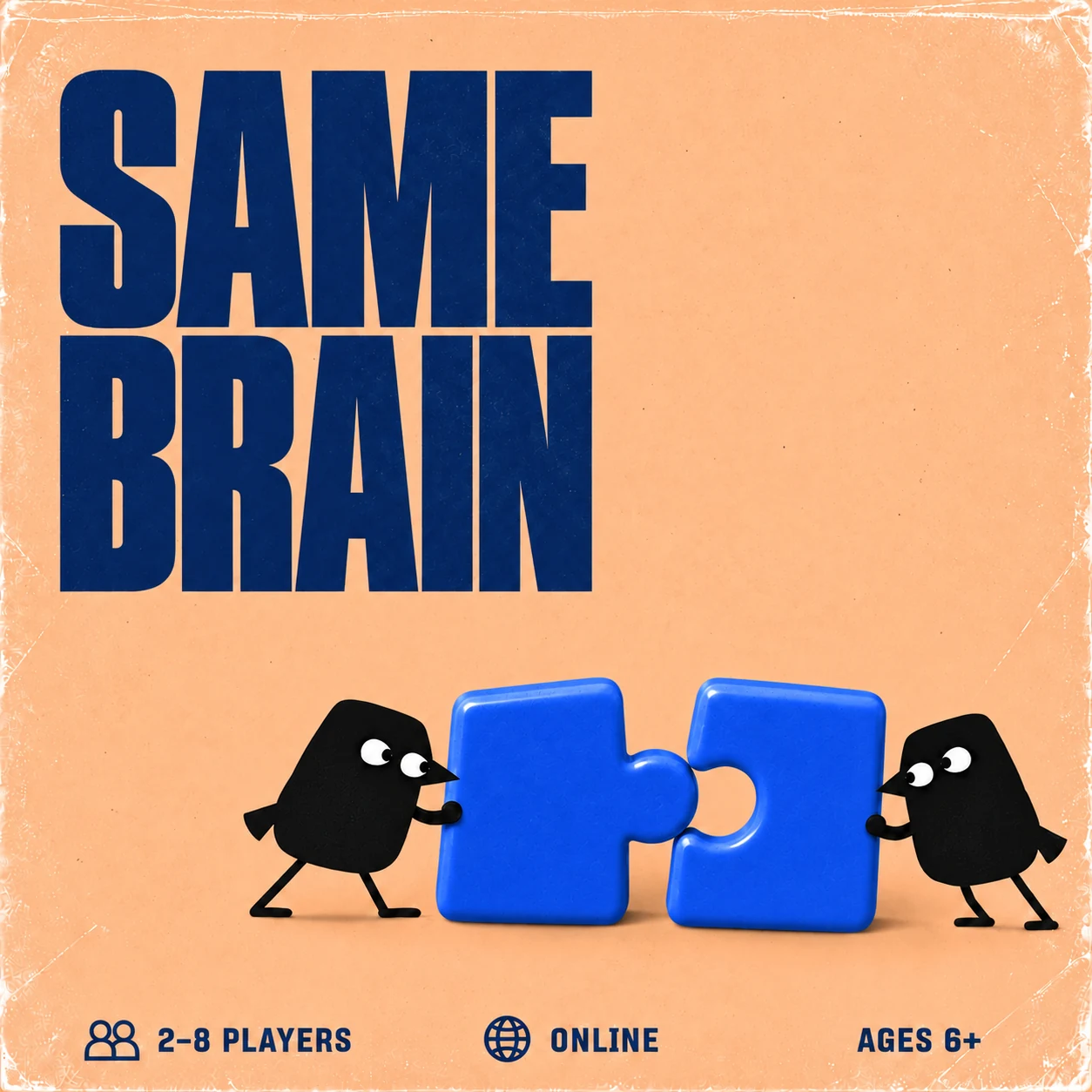
Same Brain
2–12 players · Private answers
Same Brain gives everyone a moment to think privately before answers appear. The interest is in the matches, rather than who speaks most confidently. Use an everyday prompt for the first round. A new group should not need to know private facts about each other to take part.
Rules, examples & play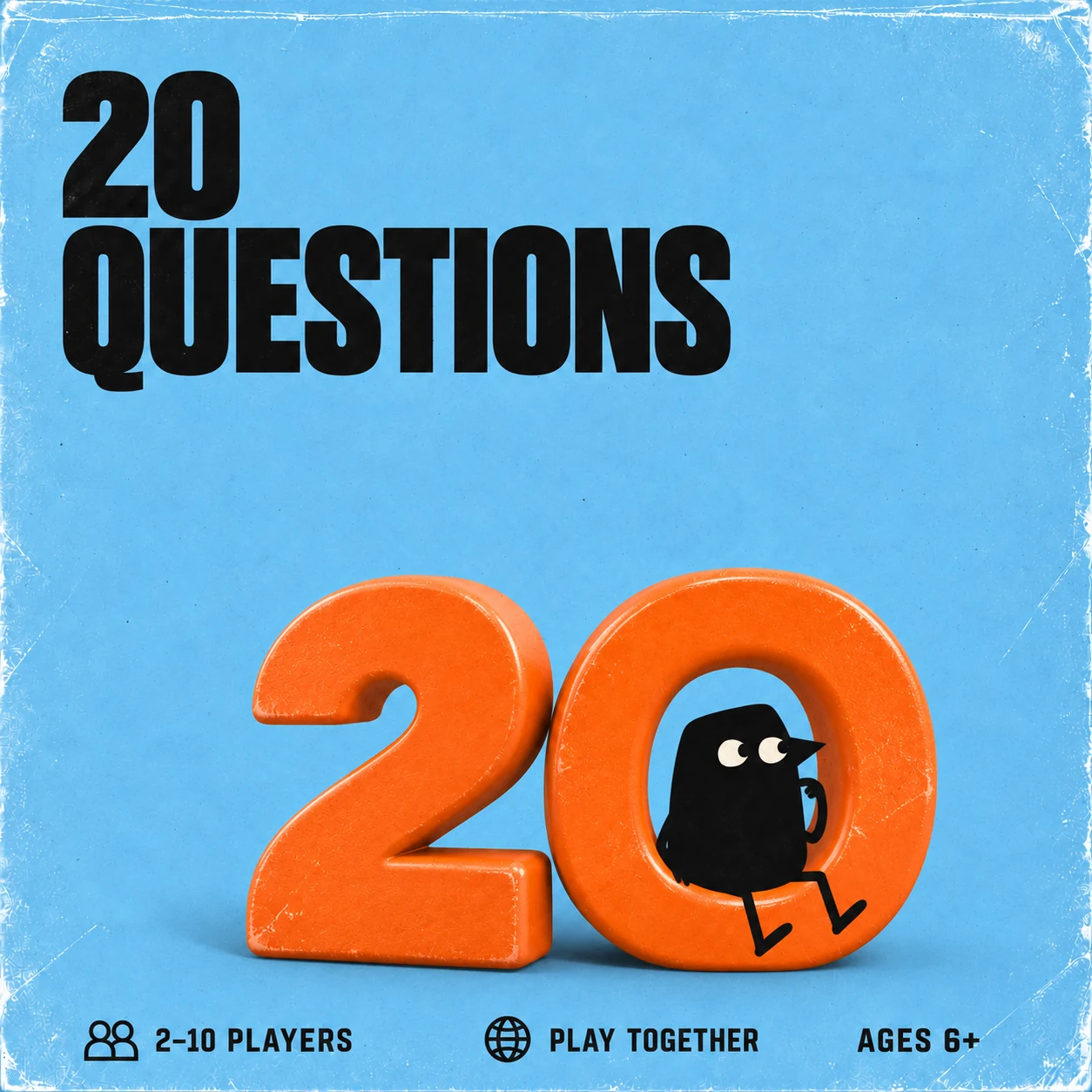
20 Questions
2–12 players · Private answer
20 Questions turns attention toward a shared puzzle. Each person can contribute a yes-or-no question, but there is no need to demand one from everyone in a strict circle. Let someone listen for a round before taking the secret-answer role. Ask the answer holder to confirm the category if the group gets stuck.
Rules, examples & play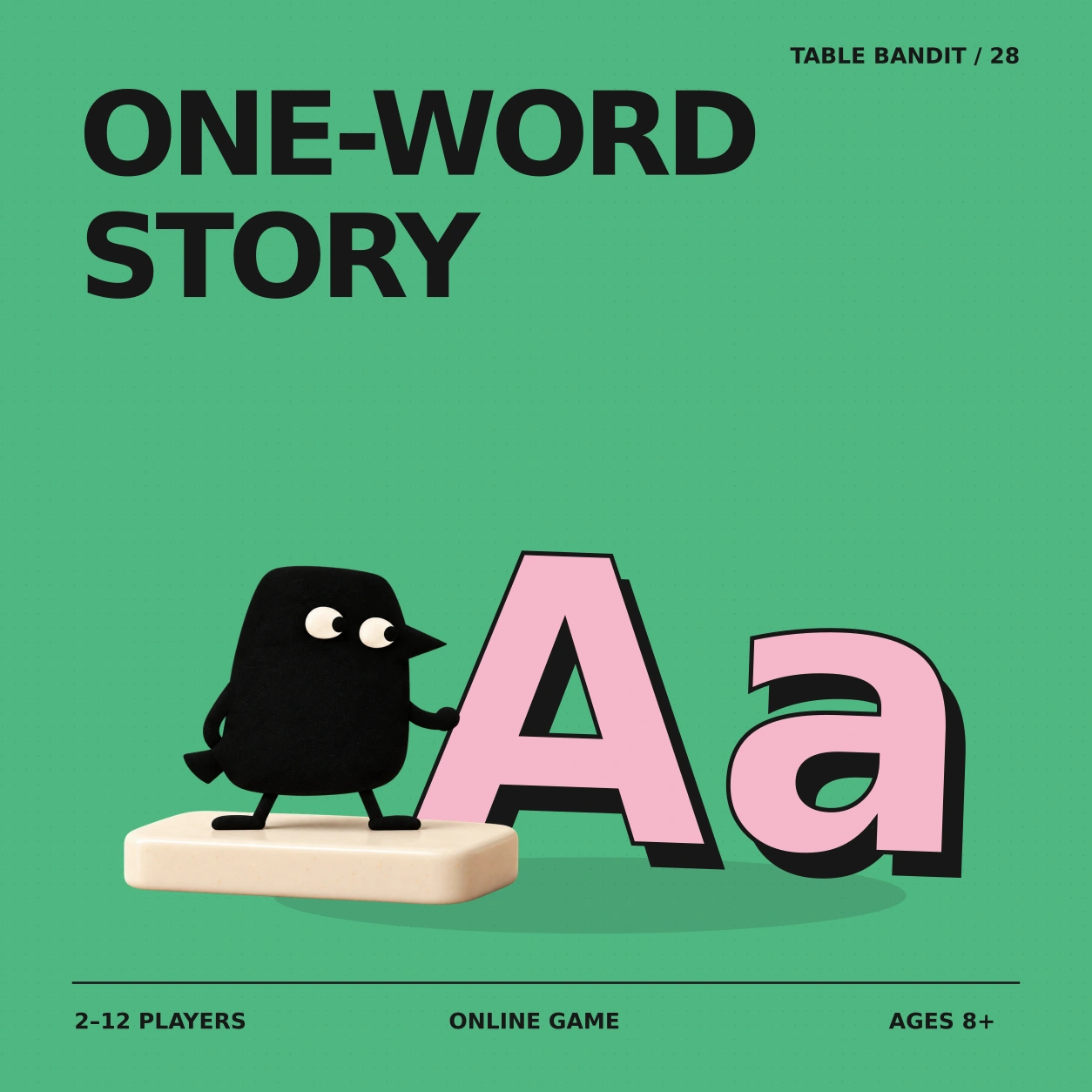
One-Word Story
2–12 players · Talk together
One-Word Story limits each contribution to one word. That keeps turns small, although improvising quickly can still feel demanding. Remove time pressure for your opening round and let a player pass. Treat an unexpected word as part of the story instead of correcting it.
Rules, examples & playOffer two ways to start
Ask the group whether they would prefer a word-matching game or a guessing puzzle. A small choice is easier than asking everyone to pick from the full catalogue. Explain that watching the first round is fine. Quiet participation is still participation; nobody has to become the evening’s entertainer.
Keep the first prompt ordinary
Choose everyday topics such as food, animals or places. Save personal questions, timed pitches and bluffing accusations for a group that actively wants them. An easy rule does not automatically make a game comfortable: being asked to act alone can be harder than learning a few extra steps.
Let people change their minds
After one round, ask whether to repeat or switch. Avoid making the quietest person explain why they prefer something else. If a player passes, continue without turning it into another question. Use New round when the group wants a fresh start; scores can stay empty.
Before you start
- Offer two simple formats.
- Avoid surprise performances.
- Ask whether the group wants another round.
One more thing
Are these games only for shy people?
No. They suit mixed groups too. These are hosting suggestions, not guarantees about what every person will enjoy. Ask your friends which kind of participation they prefer and adapt the pace together.
Player counts and rules refer to the Table Bandit versions linked here. Practice examples are illustrative and may differ from generated prompts. For remote play, use a separate voice or video call.
Find your game